












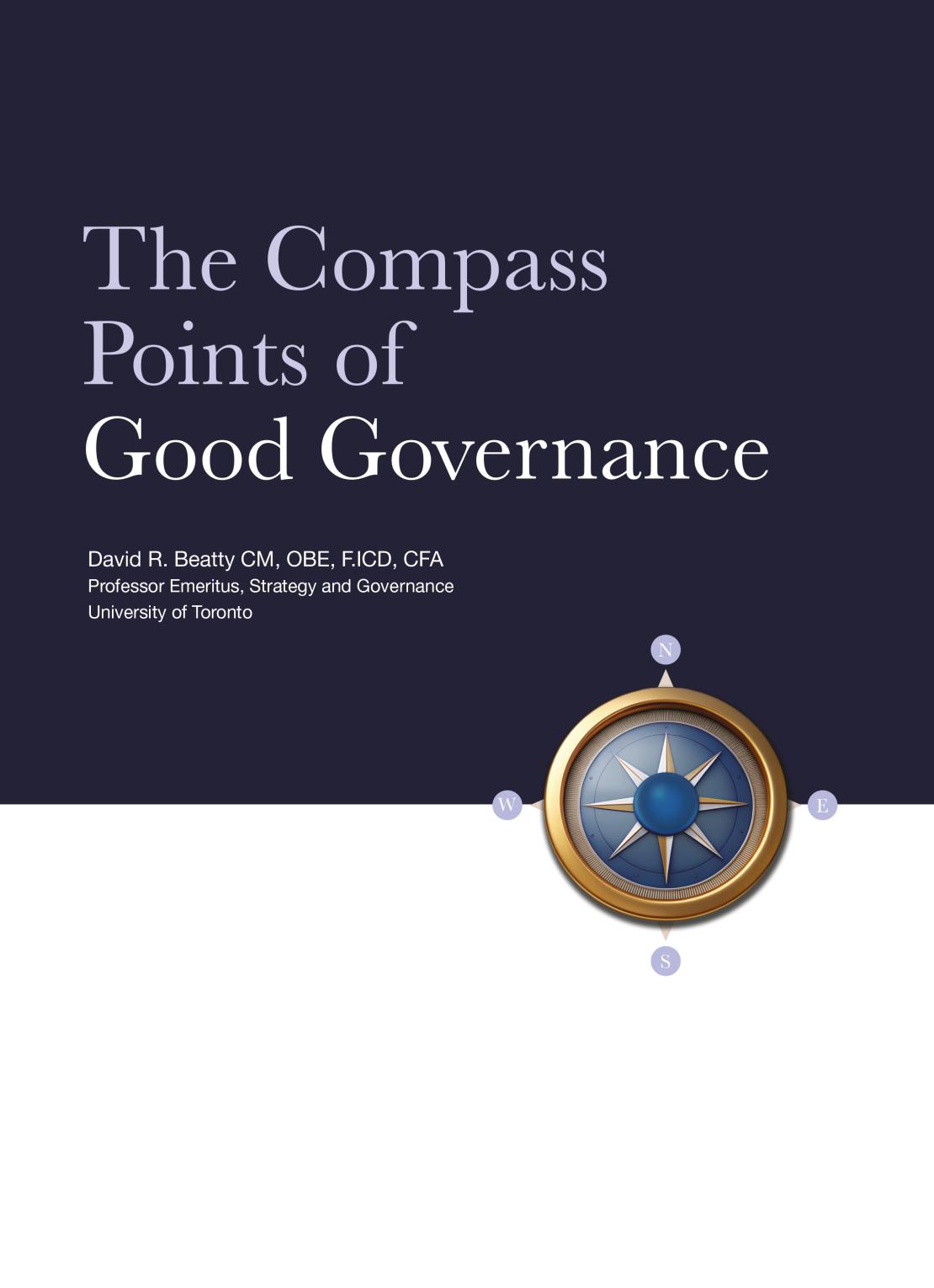


The Compass Points of
Good Governance
The book moves beyond conventional definitions of corporate governance by positioning boards of directors not simply as supervisory bodies, but as mechanisms that represent the interests of the company and guide its long-term sustainability and direction. Within this framework, the responsibility of board members is not limited to monitoring performance; it also includes balancing competing stakeholder interests, upholding ethical and strategic direction, and safeguarding the long-term well-being of the organization.
Beatty structures board work around three core lenses: looking back (oversight), monitoring the present (supervision), and shaping the future (foresight). A central critique in the book is that boards tend to spend a disproportionate amount of time on past performance, thereby neglecting the area where true value is created—foresight. High-performing boards, by contrast, deliberately allocate their time to future-oriented matters such as strategy, risk, and talent, where their contribution has the greatest impact.
This perspective is operationalized through the “board compass” model introduced in the book. The compass consists of four key elements: people and competencies (who), agenda (what), information and board materials (how), and structure (system)—with the chair at the center, ensuring alignment and effectiveness across all dimensions. The book ultimately argues that effective governance is not a checklist of rules, but a capability: the ability to bring the right people together, ensure high-quality information flow, focus on strategic priorities, and foster a culture of constructive challenge, offering leaders a comprehensive mental model for navigating complexity and making better decisions.